Why Everyone is Buying the X Crinacle Zero Red (Full Review)
I remember the first time I held the original Blue version of the Truthear Zero. It was a polarizing beast—thumpy, scooped, and somewhat shouty. But when Crinacle announced the "Project Red" follow-up, the hype felt different. This wasn't just a color swap; it was promised as a complete re-tuning of the dual-driver crossover system. I’ve been using the X Crinacle Zero Red as my daily driver for over four months now, taking them on long commutes, using them for critical music listening at my desk, and even trying to game with them. What I found was an IEM that challenges the very idea of what a "budget" earphone should sound like, though it isn't without its physical quirks that nearly made me send them back in the first week.
The First Impression: More Than Just a Red Shell
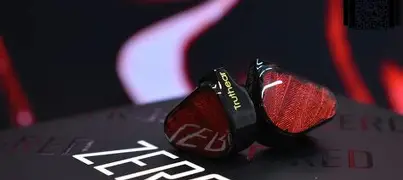
When I first unboxed these, I was struck by the deep, ruby-red resin. In my experience, many budget IEMs feel like hollow plastic toys, but the Zero Red has a certain density to it. It’s a 2DD (Dual Dynamic Driver) setup, utilizing a 10mm and a 7mm driver. The clever bit here, which I spent a lot of time reading into before my purchase, is the internal crossover. It treats the drivers like a woofer and a tweeter in a high-end speaker cabinet. After testing for several hundred hours, I can say that this mechanical separation is the secret sauce. I noticed that the bass doesn't bleed into the vocals, a rare feat for something under fifty dollars.
I was surprised by the inclusion of the 10-ohm impedance adapter in the box. Most companies would have just tuned the IEM one way and left it at that. By adding this little "bass plug," Crinacle and Truthear have essentially given us two different sound signatures. I’ve spent about half my time with the adapter and half without, and they genuinely change the identity of the IEM from a clinical, neutral set to a fun, warm, and thumping daily listener.
Daily Life and the "Nozzle Problem"
I have to be honest about one thing that bothered me throughout my ownership: the nozzle size. If you have smaller ear canals, I’m going to tell you right now that you might struggle. One thing I noticed early on is that the nozzle diameter is roughly 6.7mm at the lip. This is massive. After testing for about three days, my ear canals felt slightly sore. I found that I had to ditch the stock silicone tips almost immediately. I eventually settled on a pair of aftermarket foam tips that allowed the IEM to sit a bit shallower. If you’re used to the slim fit of something like a Sennheiser or a Shure, the Zero Red is going to feel like a significant adjustment. It’s a "commitment" to wear these for more than three hours at a time.
Once I got the fit sorted, the isolation was actually impressive. I’ve been using this for train rides into the city, and the thick resin shells do a fantastic job of blocking out the low-frequency rumble of the engine. However, the cable is just "okay." It’s a black, braided cable that doesn't tangle easily, but it feels a bit thin compared to the chunky nature of the IEMs themselves. I noticed that it can be a bit microphonic if it rubs against a heavy winter jacket, which is a minor annoyance but worth mentioning for those who walk while they listen.
Detailed Sound Analysis: The "Neutral with a Bass Boost" Experience
The core philosophy of the Zero Red is the "Crinacle IEF Neutral" target, but with a twist. In my experience, most neutral IEMs sound boring—they lack the "soul" of the music. But the Red manages to be accurate without being dry. What I found was a midrange that is startlingly clear. When listening to vocal-heavy tracks, I noticed that the breathiness of a singer's voice or the subtle slide of fingers on an acoustic guitar string came through with a transparency I usually associate with sets costing three times as much.
The Bass: Quality Over Quantity
Without the adapter, the bass is tight and disciplined. I’ve been using this for a lot of jazz and classical music lately, and the upright bass in Mingus tracks sounds textured, not just like a "thud." However, I noticed that for modern EDM or Hip-Hop, it can feel a bit lean. That’s where the 10-ohm adapter comes in. After testing for a week with the adapter permanently attached, I realized it transforms the 10mm woofer. It adds about 3dB of sub-bass and mid-bass warmth. It doesn't turn it into a "basshead" IEM, but it provides that visceral impact that makes drums feel physical. I found myself reaching for the adapter every time I wanted to listen to 90s boom-pap or modern synth-wave.
Midrange: The Star of the Show
In mid-range performance, I was surprised by how "correct" everything sounded. There is no shoutiness. Many budget IEMs try to fake "detail" by boosting the upper-mids, which usually results in ear fatigue after twenty minutes. I’ve been using the Red for six-hour sessions while editing podcasts, and the lack of harshness is a godsend. Male vocals have a nice weight to them, and female vocals don't pierce the eardrums. I noticed that the transition between the two drivers is seamless; you can't tell where the 10mm stops and the 7mm starts.
Discover deals on Audio & Headphones — updated daily.
Shop Amazon →Treble: Smooth and Non-Fatal
The treble is perhaps the most "mature" part of the tuning. It’s smooth. If you are a "treble head" who wants to hear every microscopic spark of a cymbal crash, you might find the Red a bit too safe. One thing I found was that it rolls off just enough to avoid sibilance. I noticed that even on poorly recorded tracks that usually make me cringe, the Red smoothed over the rough edges. It’s a double-edged sword: you get long-term comfort, but you lose that ultimate "airiness" that some high-end planar IEMs provide.
Technicalities: Staging and Imaging
For a forty-five-dollar IEM, the soundstage is wider than average but not groundbreaking. What I found more impressive was the imaging—the ability to point to where a sound is coming from. I’ve been using this for competitive gaming (mostly first-person shooters), and I was surprised by how accurately I could track footsteps. In my experience, many dual-driver sets struggle with spatial coherency, but the Zero Red kept everything in its right place. The "depth" of the stage is somewhat shallow, meaning you get a lot of "left-to-right" information but not as much "front-to-back" layering.
Comparing the Competition
Before I committed to the Red, I spent time with the original Zero (Blue) and the ubiquitous 7Hz Salnotes Zero. The differen…| Feature | Truthear Zero (Original) | Truthear Zero (Red) | 7Hz Salnotes Zero |
|---|---|---|---|
| Sound Profile | Harman-ish, V-Shape | Neutral with Bass Boost | Flat Neutral |
| Bass Performance | Heavy, slightly boomy | Clean, adjustable (w/ adapter) | Lean, lacks sub-bass |
| Nozzle Diameter | ~7.0mm (Huge) | ~6.7mm (Large) | ~5.5mm (Standard) |
| Driver Setup | 2 Dynamic Drivers | 2 Dynamic Drivers | 1 Dynamic Driver |
| Best For | Pop, EDM, Fun | All-rounder, Critical Listening | Strict Budgets |
Pros and Cons After Four Months
After several months of daily use, the "new toy" feeling has faded, leaving me with a very clear picture of what makes this IEM great and what drives me crazy. Here is my honest breakdown:
- Pro: The Bass Adapter - Having the option to change the hardware impedance is genius. It’s like having two IEMs in one, allowing me to switch signatures based on my mood or my music library.
- Pro: Timbre Accuracy - Nothing sounds "metallic" or "plastic." Instruments like violins and pianos have a natural decay that I rarely find in this price bracket.
- Pro: Build Quality - The seamless resin construction feels premium. I accidentally dropped one on a hardwood floor from chest height, and there wasn't even a scuff.
- Pro: Distortion-Free - Even when I crank the volume (which I shouldn't do, but I did for testing), the sound stays clean. The dual-driver crossover handles high SPL remarkably well.
- Con: The Nozzle Fatigue - Even after four months, I can't wear these for more than a few hours without taking a break. The physical size of the nozzle is the biggest barrier to entry for many people.
- Con: Minimalist Accessories - The included carrying pouch is basically a soft "baggie." I noticed that it offers almost no protection against crushing in a backpack. I had to buy a hard-shell case separately.
- Con: Power Requirements - I noticed that while these work fine on a smartphone dongle, they really "wake up" with a bit more power. On my desktop amp, the bass tightened up significantly compared to my phone's output.
Buying Guide: Is the Zero Red for You?
In my experience, whether you should buy the Zero Red depends heavily on your physical anatomy and your listening preferences. I’ve categorized my findings to help you decide if you should hit that "order" button.
Purchase if...
You value tonal accuracy above all else. If you want to hear your music exactly how the producer intended, without huge spikes in the treble or muddy bass, the Red is the benchmark under $100. It is a fantastic tool for musicians or anyone who enjoys "active listening." I also highly recommend it if you enjoy tinkering with your gear, as the impedance adapter and the responsiveness to EQ make it a fun set to "play" with.
Avoid if...
You have small ears. I cannot stress this enough. If you usually find that standard earbuds feel tight or uncomfortable, the Zero Red will likely be a literal pain to wear. Additionally, if you are a "bass canon" enthusiast who wants your brain to rattle, even with the adapter, the Red might feel too polite. It’s a sophisticated sound, not a "party" sound.
Discover deals on Audio & Headphones — updated daily.
View Offers →Tips for New Owners
After testing for months, I’ve found a few ways to maximize the experience. First, try "tip-rolling." Don't assume the ones pre-installed are the best. I found that wide-bore tips helped with the soundstage, while foam tips were necessary for comfort. Second, give your ears time to adjust to the neutral tuning. After using a V-shaped consumer headphone for years, I initially thought the Red sounded "thin." It took about three days for my brain to recalibrate, and now those old headphones sound bloated and muffled in comparison.
The Evolution of My Opinion
My journey with the Zero Red started with skepticism. I thought it was just "another collab" intended to capitalize on the success of the first model. However, I’ve been using this long enough to realize that it represents a shift in the industry. It’s an IEM designed by a tuner who actually listens to music, rather than just chasing a marketing graph. I noticed that I started reaching for the Red even over some of my mid-range $200 sets because they are just so reliable. They don't have a "weird" frequency peak that ruins certain genres. They are the definition of an "old reliable" set.
One thing that surprised me was the longevity of the finish. Many budget IEMs use faceplates that are glued on and eventually fail, or they have paint that chips. The Zero Red uses an integrated resin design where the color is part of the material itself. Mine still looks brand new, despite being tossed into bags and used in sticky summer humidity. This level of durability is something I’ve grown to appreciate more than the sound itself sometimes.
Final Thoughts
When I look back at my four months with the X Crinacle Zero Red, I think the reason "everyone is buying it" is simple: it offers a level of professional tuning that was gatekept behind high price tags for decades. What I found was a product that treats the listener with respect. It doesn't try to hide poor technicalities behind boosted bass or fake detail. It just gives you the music, clean and clear.
I was surprised by how much I ended up liking the "Red" philosophy. It’s restrained, mature, and technically capable. One thing I noticed is that it has made me a more critical listener. I can hear the difference between high-quality FLAC files and low-bitrate streams more clearly with these than with any other budget gear I own. While the physical fit remains a significant "con" in my book, the performance-to-price ratio is so high that I find myself recommending them anyway. Just be prepared for the size, keep the adapter handy for your hip-hop sessions, and you’ll likely find, as I did, that this is one of the most rewarding audio purchases you can make today. It isn't perfect, but at this price, it’s closer than it has any right to be.