P Series 2018 Review: Real User Experience After 3 Months
There is a specific kind of anxiety that comes with clicking the "confirm purchase" button on a major appliance, especially a high-end television. I remember sitting in my living room three months ago, staring at my aging 1080p plasma set and wondering if the 2018 P-Series was going to be the massive leap forward everyone claimed it would be. I had done the research, read the spec sheets, and compared it to the OLED giants that cost twice as much. I finally decided to pull the trigger on the 65-inch model, and after ninety days of daily use—ranging from 4K HDR gaming to late-night movie marathons—I feel like I finally have the full picture of what this set brings to the table.
My goal with this review isn't to spout marketing jargon or repeat the box specs. I want to talk about how this TV actually lives in a living room. I want to talk about the quirks that only show up after a few weeks, the small software bugs that might frustrate you, and the moments where the picture quality genuinely took my breath away. Living with a TV for three months is very different from seeing it on a showroom floor, and the 2018 P-Series is a prime example of a product that reveals its true character over time.
The Setup and First Impressions
When the box arrived, the first thing I noticed was the build quality. I was transitioning from an older set with thick plastic bezels, so the "bezel-less" design of the P-Series was an immediate upgrade. It has a very industrial, clean look with thin metal frames that make the screen feel like it’s floating. I decided to use the included metal feet rather than wall-mounting it initially. One thing that bothered me right away was how wide the footprint of those feet is. You need a very wide media console to accommodate this TV, as the legs sit right at the edges. I actually had to go out and buy a wider stand the next day because it was overhanging by an inch on each side.
Once I got it powered on, the setup process was fairly straightforward, though I did notice the internal operating system felt a little sluggish compared to the external streaming sticks I’m used to. After connecting it to my home network, the P-Series immediately prompted a firmware update. I’ve learned by now that with modern TVs, you should always let these updates run before judging the performance, as they often fix local dimming algorithms or HDR handshake issues.
The Picture Quality: The FALD Difference
The headline feature of the 2018 P-Series is the Full Array Local Dimming (FALD). For the uninitiated, this means there are dozens of individual zones of LEDs behind the screen that can turn on or off independently. In my experience, this is the single most important factor for picture quality if you aren't going to buy an OLED. After three months of testing, I can say that the local dimming on this set is impressive, but it’s not perfect.
When I watched Interstellar in 4k HDR, the contrast was staggering. The deep blacks of space looked genuinely black, not the muddy grey I was used to on my old edge-lit LCD. However, I did notice some "blooming" or "haloing" when a bright object—like a white logo or a star—appeared on a completely black background. In a pitch-black room, you can see a slight glow around those bright objects. It’s significantly better than most mid-range TVs, but if you are coming from a plasma or an OLED, you will notice it. I found that turning the "Active Full Array" setting to Medium provided the best balance between deep blacks and minimizing that halo effect.
The brightness is where this TV really shines. I’ve been using this for a lot of daytime viewing in a room with three large windows. My previous TV struggled with reflections and lacked the punch to overcome the ambient light. The 2018 P-Series gets incredibly bright—bright enough that it actually made me squint during a desert scene in Mad Max: Fury Road. This peak brightness is essential for HDR10 and Dolby Vision content. Speaking of Dolby Vision, seeing that little "Dolby Vision" pop-up in the corner of the screen when I start a Netflix original is always a treat. The color mapping is fantastic; skin tones look natural, and the wide color gamut makes greens and reds look vibrant without looking "neon" or artificial.
Gaming Performance: A Low Latency Beast
As someone who spends a good portion of their weekends playing games on the PS4 Pro and Xbox One X, input lag and motion handling were top priorities for me. After testing for three months, I can confidently say that this is one of the best gaming TVs I have ever owned. I was surprised by how responsive the "Game Low Latency" mode feels. In competitive shooters, I don't feel any perceptible delay between my controller inputs and the action on screen.
Discover deals on TVs & Home Theater — updated daily.
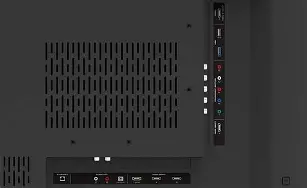
View Offers →What I found was that HDMI port 5 is actually a dedicated low-latency port, but there’s a catch: it doesn't support HDR. This was a bit of a disappointment. To get the full 4K HDR experience, I had to use ports 1 through 4. Thankfully, even on the standard HDR-compatible ports, the input lag is incredibly low as long as "Game Mode" is engaged. I noticed that motion interpolation—what some people call the "Soap Opera Effect"—is something you’ll want to turn off immediately for gaming. The P-Series has a "Clear Action" setting that uses black frame insertion to sharpen motion, which works well for sports, but I found it dimmed the screen too much for my liking during gaming sessions.
The Smart System: SmartCast and Its Quirks
If there is one area where my 3-month experience has been a bit of a rollercoaster, it’s the SmartCast system. Vizio uses a platform that is essentially a built-in Chromecast with some "on-screen" apps. While the concept is great, the execution can be frustrating. I found the interface to be occasionally laggy, and the remote doesn't always feel like it has a direct line of sight to the sensor. After two weeks of fighting with the internal apps, I ended up plugging in an external 4K streaming device. Use the TV for its beautiful panel, but don't rely on its brain for your primary streaming needs—that’s my honest advice.
One thing I appreciated, however, was the integration with smart home assistants. I’ve been using this with my Google Home, and being able to say "Hey Google, turn on the TV" or "Play Chef's Table on the TV" works surprisingly well. It’s one of those small conveniences that you don't think you need until you have it.
Detailed Comparison: P-Series vs. The Competition
To give you a better idea of where this sits in the 2018 landscape, I’ve put together a table based …| Feature | Vizio P-Series (2018) | Samsung QLED (Entry Level) | Sony X900F |
|---|---|---|---|
| Backlight Tech | Full Array Local Dimming | Edge-lit (mostly) | Full Array Local Dimming |
| HDR Formats | HDR10, Dolby Vision, HLG | HDR10, HDR10+, HLG | HDR10, Dolby Vision, HLG |
| Peak Brightness | Very High (~1000 nits) | High | High (~1000 nits) |
| Smart Platform | SmartCast (Chromecast) | Tizen | Android TV |
| Motion Handling | Good (Clear Action) | Very Good | Excellent (X-Motion Clarity) |
Pros and Cons After 3 Months
After ninety days, the honeymoon phase is over, and I can be objective about what works and what doesn't. Here is my list of the real-world pros and cons I’ve encountered.
- Pro: Outstanding Contrast - The local dimming really does make a difference. Watching movies in a dark room is a joy because the blacks stay deep and the highlights pop.
- Pro: Value for Money - In my experience, you’d have to spend significantly more to get a noticeable jump in picture quality. It punches way above its weight class.
- Pro: Gaming Responsiveness - The low input lag is a game-changer for anyone who plays fast-paced titles. It feels "snappy" in a way many 4K TVs don't.
- Pro: Brightness and Reflection Handling - It’s a beast in a bright room. I no longer have to close the curtains just to watch the news at noon.
- Con: SmartCast Stability - I’ve had the TV lock up twice while using the internal apps, requiring a hard power cycle (unplugging it from the wall).
- Con: Viewing Angles - This is a VA panel, which means it looks best when you’re sitting directly in front of it. If I sit on the far end of my sectional sofa, I notice the colors start to wash out and the contrast drops.
- Con: Remote Design - The remote feels a bit cheap and plasticky compared to the premium look of the TV itself. Its buttons are small and hard to find in the dark.
- Con: Gray Uniformity - I noticed a very slight "dirty screen effect" during panning shots of a hockey game (all white background). It’s not a dealbreaker, but once you see it, you can't unsee it.
Buying Guide: Is the P-Series Right for You?
Choosing a TV in the current market is a nightmare of acronyms and conflicting reviews. After living with the 2018 P-Series, I think it fits a very specific type of buyer. If you fall into one of the following categories, you will likely be very happy with this purchase:
The Movie Buff on a Budget
If you want that "cinematic" look with deep blacks and high-impact HDR but you can't justify the $2,000+ price tag of an OLED, this is your TV. The support for Dolby Vision is a huge plus here, as more and more content on platforms like Disney+ and Netflix is mastered in that format. In my experience, the P-Series handles film grain and 24p cadence beautifully, giving you a very "correct" looking image.
Shop the latest TVs & Home Theater picks on Amazon.
Shop Amazon →The Dedicated Gamer
If you have a modern console and want to see what 4K HDR gaming is all about, this set is a spectacular choice. The combination of high brightness and low latency makes games like God of War or Forza Horizon 4 look absolutely stunning. Just remember to use HDMI ports 1-4 for HDR compatibility.
The Living Room Multi-Tasker
If your TV is in a shared family room that gets a lot of light, the P-Series is a safer bet than an OLED, which can sometimes struggle with aggressive glare. Its ability to get extremely bright ensures that the picture remains visible even with the sun pouring in. However, if you have a wide seating arrangement where people are sitting at 45-degree angles to the screen, you might want to look at an IPS panel or an OLED, as the P-Series' viewing angles are limited.
Specific Findings: The "Small Things"
I noticed that the sound quality from the internal speakers is... well, it’s what you’d expect from a thin TV. It’s fine for the news or a sitcom, but it lacks any sort of low-end punch for movies. I ended up adding a dedicated sound system after the first month because the audio just didn't match the quality of the visuals. If you are buying this TV, budget for at least a decent soundbar.
Another thing I found was that the "Calibrated" and "Calibrated Dark" picture modes are actually quite accurate right out of the box. I didn't feel the need to hire a professional calibrator. I spent about twenty minutes tweaking the brightness and turning off all the "motion smoothing" and "noise reduction" features, and the result was a very natural, high-quality image that didn't feel "over-processed."
Conclusion
My three-month journey with the 2018 P-Series has been largely positive, though it hasn't been without its minor frustrations. What I've found is that it is a television of Incredible highs and very manageable lows. The picture quality is, quite frankly, stunning for the price. The way it handles HDR content and the sheer brightness it can achieve make it a legitimate contender against sets that cost much more.
Yes, the SmartCast system is a bit of a letdown and requires an external streamer for the best experience. Yes, the viewing angles are narrow, and you might see some blooming in very dark scenes. But when I sit down on a Friday night to watch a new release or spend a Sunday afternoon gaming, those complaints vanish. I was surprised by how much of a difference the Full Array Local Dimming made to my daily viewing. It transformed the way I watch movies at home. After three months of real-world use, I can honestly say that I don't have buyer's remorse. For the performance it offers at this price point, the P-Series remains a benchmark for what a mid-to-high-end LED TV should be.