Don't Buy the Asus Rog Xreal R1 Ar Glasses Hands On Until You Read This Full Analysis
The convergence of portable gaming and augmented reality has long been a dream for tech enthusiasts. For years, the industry teased us with bulky headsets and limited fields of view. However, the landscape shifted dramatically with the introduction of the Asus Rog Xreal R1 Ar Glasses. As a collaboration between the legendary Republic of Gamers (ROG) brand and Xreal, a leader in spatial computing optics, expectations were set at a fever pitch. This device promises to transform the way we interact with laptops, consoles, and mobile devices by projecting a massive, high-definition screen directly into the wearer's line of sight.
But beyond the marketing sizzle and the sleek aesthetics lies a complex reality. The Asus Rog Xreal R1 Ar Glasses represent a significant investment, and for many users, they represent a complete shift in their computing workflow. Whether you are a professional seeking a multi-monitor setup on a plane or a hardcore gamer wanting to immerse yourself in a 120Hz virtual display, there are critical nuances to this hardware that are often glossed over in quick hands-on previews. This analysis dives deep into the ergonomics, visual fidelity, software ecosystem, and practical reliability of the R1 to determine if it truly earns a place in your tech arsenal.
Understanding the Core Technology
To understand the Asus Rog Xreal R1 Ar Glasses, one must first understand what they are not. These are not standalone virtual reality (VR) headsets like the Meta Quest. They do not have an onboard processor to run complex AAA games independently. Instead, they are sophisticated wearable displays. At their heart, they utilize Micro-OLED technology to project an image that appears to be floating several feet in front of the user. In the context of the ROG ecosystem, these are marketed as the ultimate companion for the ROG Ally, the Zephyrus laptop line, and other USB-C DP Alt Mode compatible devices.
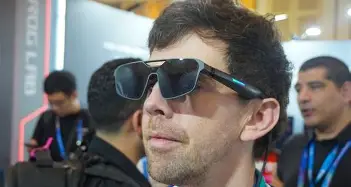
The "Hands On" experience typically begins with the realization of how light they are. Weighing significantly less than a traditional VR headset, they look like slightly oversized sunglasses. This is where the engineering of Asus and Xreal shines. They have managed to cram dual 1080p displays—one for each eye—into a frame that doesn't immediately cause neck fatigue. However, the magic happens in the optics. By using a birdbath optical engine, the light from the Micro-OLEDs is reflected into your eyes, allowing you to see the digital content while maintaining some peripheral awareness of your physical surroundings.
Visual Fidelity and Display Performance
The primary reason anyone considers the Asus Rog Xreal R1 is the screen quality. On paper, it offers a 1920x1080 resolution per eye. While that might sound modest compared to 4K monitors, the pixel density (Pixels Per Degree or PPD) is remarkably high because the screens are so close to your eyes. The result is an image that is crisp, vibrant, and surprisingly bright. Colors pop with the deep blacks and infinite contrast typical of OLED panels, making it an excellent choice for watching HDR content or playing visually dense games like Cyberpunk 2077.
One of the standout features for the ROG version of these glasses is the refresh rate. Most standard AR glasses cap out at 60Hz or 75Hz. The R1, staying true to its Republic of Gamers heritage, supports up to 120Hz. This is a game-changer for fluidity. Moving windows around a virtual desktop or engaging in fast-paced shooters feels significantly more responsive. However, achieving this 120Hz output requires a compatible source device, and buyers should verify that their specific laptop or handheld supports high-refresh output over USB-C.
There is, however, a catch: the "Sweet Spot." Because the image is projected through lenses, if the glasses are not perfectly aligned with your pupils, the edges of the screen can appear blurry. This is where the R1's adjustment features come into play. It includes multiple nose bridge sizes and a three-position temple adjustment to tilt the glasses. Even with these, users with high interpupillary distances (IPD) may find that they have to "hunt" for the perfect fit to keep the entire virtual screen in focus.
Design and Ergonomics: The Wearability Factor
The ROG aesthetic is well-represented here. The frame features the sharp, aggressive lines synonymous with the brand, though it remains tasteful enough for public use. The build quality feels premium, utilizing a mix of high-grade plastics and magnesium alloys to keep weight down. The temples are flexible, which helps in fitting various head shapes, but they also house the integrated speakers. These speakers provide a decent spatial audio experience, though they lack low-end punch and will leak sound to anyone sitting near you in a quiet room.
Find top-rated Laptops & Computers products at great prices.
Shop Amazon →For laptop users, the ergonomic benefits are profound. Usually, using a laptop involves looking down, which leads to "tech neck." With the R1, you can sit with your head in a neutral, forward-facing position while your "monitor" floats in front of you. This is particularly useful for long-haul flights or commutes. However, the glasses are tethered. A single USB-C cable runs from the left temple to your device. While the cable is thin and braided for durability, it is still a cord that can get snagged. It is the price one pays for a lightweight design that doesn't require a heavy battery on your face.
The Nebula Software and ROG Integration
The hardware is only half the story. The software, known as Nebula, is what attempts to turn these glasses into a productivity powerhouse. When connected to a Windows laptop, Nebula allows for "Spatial Display" mode. This creates multiple virtual monitors—up to three—in a curved arrangement around your head. You can turn your head to look at different screens, effectively giving you a massive workstation that fits in your pocket.
The ROG-specific firmware adds optimizations for the ROG Ally and Asus laptops, including simplified toggles for brightness, volume, and refresh rates. However, the Nebula software is still in a state of evolution. It can be resource-intensive on the host laptop, and tracking jitters can occasionally occur. If the software loses its "anchor," the virtual screens may drift, requiring a manual reset. For many, the most reliable way to use the R1 is in "Air Casting" mode, which simply mirrors your device's screen as a fixed display that follows your head movement. While less "high-tech" than spatial computing, it is the most stable experience for gaming and movie watching.
Pros and Cons
- Pros:
- Exquisite Micro-OLED panels with deep blacks and vibrant color reproduc…
Feature Asus Rog Xreal R1 Standard Xreal Air 2 Generic Portable 15" Monitor Display Type Micro-OLED Micro-OLED IPS LCD Refresh Rate Up to 120Hz Up to 120Hz 60Hz Weight ~75g ~72g ~700g - 1kg Perceived Screen Size Up to 201" (Virtual) Up to 201" (Virtual) 15.6" (Fixed) Software Support ROG Optimized Nebula Standard Nebula Standard OS Driver Privacy High (Screen only visible to user) High Low (Visible to everyone) Buying Guide: Is the R1 Right for You?
Deciding to buy the Asus Rog Xreal R1 depends heavily on your specific use cases. It is not a "one size fits all" peripheral. Below are the primary personas that will benefit from this device, as well as those who should probably steer clear.
The Mobile Professional
If you spend a lot of time in coffee shops, coworking spaces, or airplanes, the R1 is a productivity revelation. The ability to have three virtual monitors for spreadsheets, Slack, and coding—all while maintaining privacy—is invaluable. However, ensure your laptop has a dedicated GPU or a high-end integrated chip (like Intel Iris Xe or AMD Radeon 780M) to handle the Nebula spatial processing without lag.
The Handheld Gamer
For owners of the ROG Ally or Steam Deck, the R1 is perhaps the best accessory on the market. These handhelds have great screens, but they are relatively small. Plugging in the R1 transforms the experience into a "home theater" gaming session while you're lying on the couch or in bed. The 120Hz support specifically caters to the Ally's performance capabilities in indie titles and optimized AAA games.
Find top-rated Laptops & Computers products at great prices.
See Deals →The Media Enthusiast
Watching movies on the R1 is arguably better than watching on a high-end tablet. The OLED blacks make cinematic experiences feel "massive." If you travel frequently and want a private cinema that fits in your glasses case, this is a strong contender. The included "light shield" (a plastic cover that clips onto the front) is essential here, as it blocks out the real world and maximizes the OLED contrast.
Who Should Reconsider?
If you have a strong prescription and do not want to deal with the hassle of ordering custom magnetic lens inserts, the experience will be subpar. Wearing the R1 over your existing glasses is uncomfortable and often results in poor image alignment. Additionally, if you are prone to motion sickness, the slight latency in spatial tracking (when using multiple virtual monitors) might cause discomfort over long periods.
Practical Real-World Use Cases
One of the most impressive uses of the Asus Rog Xreal R1 is in the "Steam Deck/ROG Ally" scenario. Imagine you are on a five-hour flight. Instead of hunching over a small handheld screen, you plug in the glasses, put on a pair of noise-canceling headphones, and you are suddenly in a dark room with a 130-inch screen. The physical world disappears. Because the glasses draw power from the host device, you do have to be mindful of battery life; the ROG Ally will drain significantly faster when powering the Micro-OLEDs at 120Hz. We recommend using a high-wattage power bank or a USB-C hub that supports power passthrough to keep the session going.
Another use case is coding or data analysis. Developers often find themselves limited by laptop screen real estate. By using the R1 with Nebula, you can have your IDE on the center virtual screen, your documentation on the left, and a terminal on the right. While the resolution is only 1080p, the text is remarkably legible due to the OLED contrast. However, users should be aware that the edges of the screens may require you to turn your head physically rather than just your eyes to avoid the blurring mentioned earlier.
Conclusion
The Asus Rog Xreal R1 Ar Glasses Hands On experience reveals a product that is undeniably at the bleeding edge. It is a bold step toward a future where our physical displays are replaced by lightweight, wearable optics. For the gamer who wants to maximize the potential of their ROG Ally or the creative professional who needs a portable multi-monitor setup, the R1 offers a level of utility that a standard portable monitor simply cannot match. The combination of its 120Hz refresh rate and the stunning Micro-OLED panels sets a high bar for the industry.
However, the R1 is not without its growing pains. The software ecosystem is still maturing, and the ergonomic "sweet spot" requires a bit of patience and adjustment to master. It is a specialized tool that rewards users who understand its limitations. If you can move past the tethered cable and the occasional software quirk, the R1 offers a truly transformative experience. It represents the best of what Asus and Xreal have to offer: a portable, high-performance display that literally changes how you see your digital world. Before purchasing, ensure your hardware is compatible and be prepared to invest time in fine-tuning the fit. Once you do, you might find it very difficult to go back to a traditional small laptop screen.
- Exquisite Micro-OLED panels with deep blacks and vibrant color reproduc…